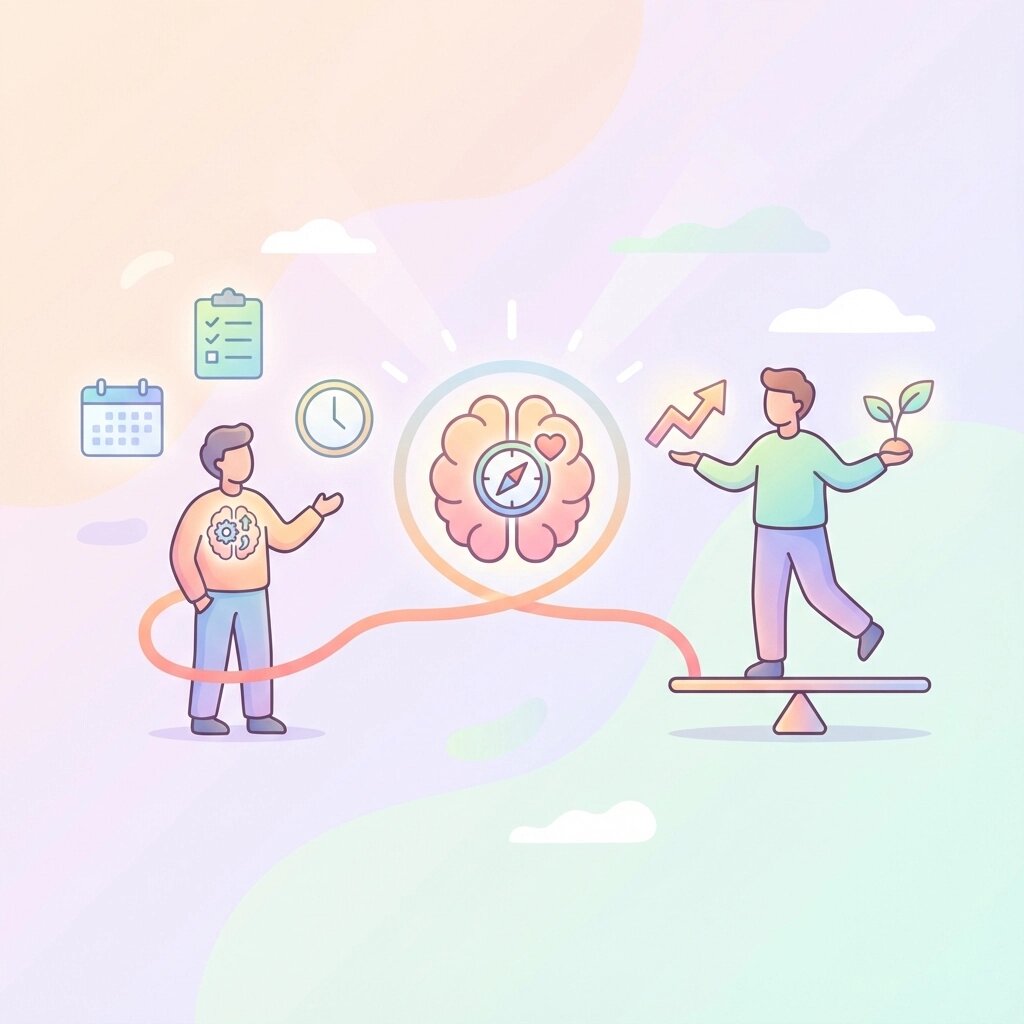
If you’ve ever felt like your brain is working against you when it comes to getting things done, you’re not alone. Maybe you start tasks with great intentions but can’t seem to finish them. Or perhaps you know exactly what you need to do, but somehow time slips away and nothing gets accomplished.
You might be dealing with executive function challenges – and that’s where executive function coaching comes in.
What Exactly Is Executive Function Coaching?
Think of executive function as your brain’s “CEO” – the part that manages planning, organizing, time management, and staying focused on goals. Executive function coaching is like having a skilled mentor who helps you strengthen these mental management skills.
Executive function coaching is a collaborative, goal-focused approach that teaches you practical strategies to improve how you plan, organize, manage time, and handle daily tasks. It’s not therapy (though it can work alongside it), and it’s not tutoring. Instead, it’s skill-building that helps you work with your brain rather than against it.
The coaching process is highly practical and action-oriented. Rather than diving deep into emotional processing, you’ll focus on developing concrete strategies that you can use right away in your daily life.
Why Executive Function Skills Matter So Much
Your executive function skills affect nearly everything you do, from simple daily tasks to major life goals. When these skills are strong, life feels more manageable. When they’re not, even basic tasks can feel overwhelming.
Here’s why building these skills matters:
Academic and Work Success: Strong executive function skills directly impact your ability to meet deadlines, stay organized, and follow through on commitments. Students with better executive function skills tend to have higher grades and less academic stress. Professionals often see improvements in project management and workplace collaboration.
Reduced Daily Stress: When you can plan ahead, manage your time well, and stay organized, you spend less mental energy on crisis management. This leaves more bandwidth for the things that actually matter to you.
Better Relationships: Executive function skills help with communication, following through on commitments to others, and managing the logistics of maintaining relationships (like remembering important dates or responding to messages).
Improved Self-Confidence: There’s something incredibly empowering about feeling in control of your own life and knowing you have strategies that actually work for you.

Real-Life Scenarios Where Executive Function Coaching Helps
Let’s look at some specific situations where executive function challenges show up – and how coaching can help:
The “Sunday Scaries” Spiral
The scenario: Every Sunday evening, you feel overwhelmed thinking about the upcoming week. You know you have things to do, but they feel like one big, scary blur.
How coaching helps: You’ll learn to break down your week into manageable chunks, create realistic daily priorities, and develop a weekly planning routine that actually feels doable (not like another item on your to-do list).
The “I’ll Start Tomorrow” Loop
The scenario: You have a big project that keeps getting pushed to “tomorrow.” Days turn into weeks, and the project looms larger and scarier in your mind.
How coaching helps: You’ll discover techniques for breaking large projects into tiny, specific steps and learn how to start before you feel ready (because spoiler alert: you’ll never feel completely ready).
The Time Disappearing Act
The scenario: You sit down to do something that should take 30 minutes, and somehow three hours have passed with very little to show for it.
How coaching helps: You’ll develop awareness of your personal time patterns and learn practical strategies for staying on track without becoming rigid or stressed.
The “Where Did I Put That?” Mystery
The scenario: You spend more time looking for things than actually using them. Your space feels chaotic, but organizing systems never seem to stick.
How coaching helps: You’ll create simple, personalized organization systems that work with your natural habits rather than against them.
Practical Self-Coaching Strategies You Can Try Right Now
While working with a professional coach can be incredibly helpful, there are plenty of strategies you can experiment with on your own. Here are some beginner-friendly approaches:
The “Two-Minute Rule”
If something takes less than two minutes to complete, do it right now instead of adding it to your to-do list. This prevents small tasks from building up into overwhelming piles.
Time Blocking (The Gentle Version)
Instead of scheduling every minute of your day, try “theme blocking.” Designate chunks of time for similar types of activities. For example: “Tuesday mornings are for administrative tasks” or “Saturday afternoons are for household projects.”
The “Good Enough” Standard
Perfect is the enemy of done. Practice identifying what “good enough” looks like for different tasks. Your grocery list doesn’t need to be as polished as a work presentation.

Body Doubling
Work alongside someone else (in person or virtually) even if you’re doing completely different tasks. The presence of another person can help maintain focus and accountability without any pressure to perform.
The “Next Smallest Step” Technique
When you feel stuck on a task, ask yourself: “What’s the very next smallest thing I could do to move this forward?” Often, the answer is something tiny like opening a document or gathering supplies.
External Memory Systems
Don’t rely on your brain to remember everything. Use calendars, reminders, notes apps, or even simple sticky notes to capture important information outside your head.
Energy Management Over Time Management
Pay attention to your natural energy patterns. Schedule demanding tasks during your high-energy times and routine tasks when your energy is lower.
Common Myths About Executive Function Coaching
Myth: “It’s just about being more organized”
Reality: While organization is part of it, executive function coaching addresses much broader skills like emotional regulation, flexible thinking, and self-awareness.
Myth: “You need to have ADHD or a diagnosis to benefit”
Reality: Anyone can benefit from stronger executive function skills. You don’t need a diagnosis or official label to work on these areas.
Myth: “It’s about forcing yourself to use systems that don’t fit you”
Reality: Good executive function coaching is about finding what works for you specifically, not following a one-size-fits-all approach.
Myth: “You should be able to figure this out on your own”
Reality: Executive function skills aren’t taught in school, and they’re not intuitive for everyone. Getting support is smart, not weak.
Building Your Personal Executive Function Toolkit
The goal of executive function coaching (whether with a professional or through self-coaching) is to build a personalized toolkit of strategies that actually work for your life, your brain, and your circumstances.
This means experimenting with different approaches, keeping what works, and letting go of what doesn’t. Your toolkit might include:
-
Planning strategies that match your thinking style
-
Organization systems that are simple enough to maintain
-
Time management approaches that reduce stress rather than create it
-
Ways to break down overwhelming tasks into manageable pieces
-
Methods for staying motivated and following through on goals
-
Techniques for managing distractions and maintaining focus

he Ripple Effect of Stronger Executive Function Skills
When you develop stronger executive function skills, the benefits extend far beyond just getting more done. You might notice:
-
Increased confidence in your ability to handle challenges
-
Reduced anxiety about forgetting important things or missing deadlines
-
Better relationships because you’re more reliable and present
-
More energy because you’re not constantly fighting against chaos
-
Greater sense of control over your daily life and long-term goals
Getting Started: Your First Steps
If you’re ready to begin strengthening your executive function skills, start small:
-
Pick one area to focus on first (time management, organization, planning, etc.)
-
Choose one simple strategy from this article to try for a week
-
Notice what happens without judging whether it’s “working” yet
-
Adjust and experiment based on what you learn about yourself
-
Celebrate small wins along the way
Remember, building executive function skills is a process, not a destination. Be patient with yourself as you discover what works best for your unique brain and circumstances.
The most important thing to understand is that struggling with executive function doesn’t mean anything is wrong with you. Your brain just works differently, and with the right strategies and support, you can absolutely develop the skills you need to thrive. 
Whether you choose to work with a professional coach or develop these skills on your own, you’re taking an important step toward a more manageable and fulfilling life. And that’s something worth celebrating.