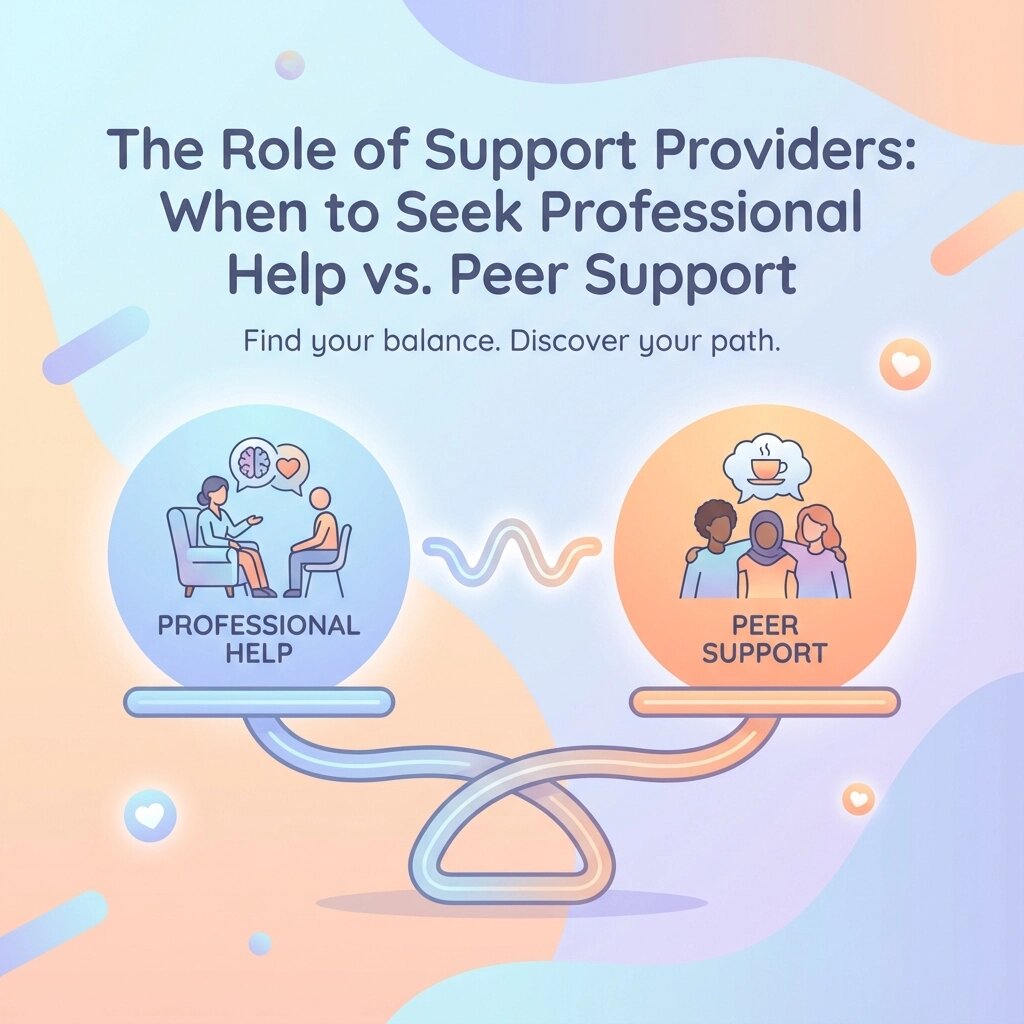
When you’re navigating life as a neurodivergent person, figuring out what kind of support you need can feel overwhelming. Should you find a therapist? Look for a peer mentor? Join a support group? The truth is, there’s no one-size-fits-all answer: and that’s actually a good thing. Understanding the different types of support available empowers you to make choices that truly work for your unique situation.
Let’s break down the key differences between professional help and peer support, so you can confidently decide what’s right for you, right now.
What We’re Really Talking About Here
Professional support comes from licensed mental health professionals: therapists, psychologists, psychiatrists, social workers, or specialized coaches who’ve completed extensive training in evidence-based treatment approaches. They bring clinical expertise, can diagnose conditions, and often prescribe medications when needed.
Peer support comes from people who share similar lived experiences with you. This might be a certified peer specialist, someone from a support group, or even a friend who really “gets it” because they’ve walked a similar path. Their credibility comes from having been there themselves, not from a diploma on the wall.
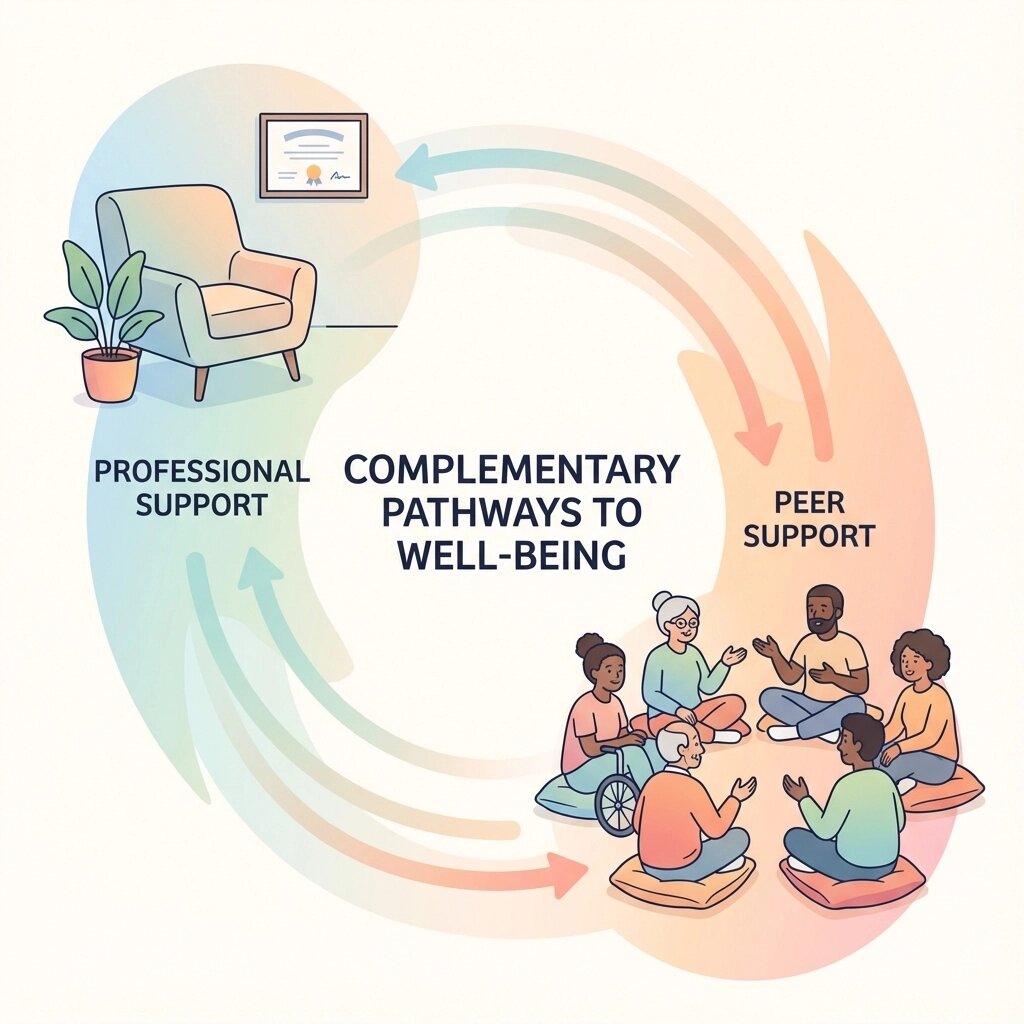
The key difference? Professionals offer clinical expertise and objective perspective, while peers offer the irreplaceable value of shared understanding and lived experience.
When Professional Support Shines
Sometimes, you need the specialized training and clinical perspective that only a licensed professional can provide. Here’s when professional support typically works best:
You’re Dealing with Crisis or Severe Symptoms
If you’re experiencing thoughts of self-harm, severe depression, intense anxiety that’s interfering with daily life, or symptoms that might indicate conditions requiring medication management: professional help isn’t just recommended, it’s essential. Licensed professionals are trained to assess risk, provide crisis intervention, and connect you with appropriate medical care.
You Need Diagnosis or Clinical Assessment
Wondering if you have ADHD, autism, or another neurodivergent condition? Only licensed professionals can provide official diagnoses. This matters not just for understanding yourself better, but for accessing accommodations at work or school, insurance coverage, and specific treatment approaches.
You Want Objective, Outside Perspective
Sometimes you need someone with no personal connection to your situation who can offer unbiased feedback. A professional therapist can help you see patterns you might miss and challenge thoughts or behaviors in ways that friends or family members might not feel comfortable doing.
You’re Working Through Deep-Rooted Issues
Trauma, complex family dynamics, or long-standing patterns often require the specialized techniques and theoretical frameworks that professionals bring. They’re trained to guide you through processing difficult experiences safely.
Where Peer Support Excels
Peer support offers something that no amount of professional training can replicate: the understanding that comes from having lived through similar experiences. Here’s when peer support often works best:
You Need Someone Who Really “Gets It”
When you’re explaining executive function challenges to someone who’s never experienced them, there’s a learning curve. With peers, that implicit understanding is already there. They know what it feels like when your brain just won’t cooperate, or when sensory overload hits, or when masking becomes exhausting.
You Want Ongoing, Day-to-Day Support
Professional therapy typically happens weekly or bi-weekly in scheduled sessions. Peer support can be more flexible: check-ins throughout the week, text support during rough moments, or someone to celebrate small wins with. It fills the gaps between professional appointments.

You’re Ready for Practical, Real-World Strategies
Peers can share what actually works in daily life. They know which apps help with executive function, how to navigate workplace conversations about accommodations, or strategies for managing sensory challenges during grocery shopping. This practical wisdom comes from trial and error, not textbooks.
You Want to Reduce Isolation and Stigma
Connecting with others who share similar experiences can be incredibly validating. It normalizes your challenges and helps you realize you’re not alone. This sense of community and belonging is powerful medicine for the isolation that many neurodivergent people experience.
Cost and Accessibility Matter
Let’s be real: professional therapy can be expensive and hard to access. Wait times can be long, especially for specialists who understand neurodivergence. Peer support is often more accessible, whether through community organizations, online groups, or informal networks.
Recognizing Your Current Needs
Sometimes it’s obvious which type of support you need, but often it’s not so clear. Here are some questions to help you reflect:
Consider professional help if you’re asking:
-
Am I safe right now?
-
Do I need someone to help me understand what’s happening with my mental health?
-
Am I struggling with something that feels bigger than I can handle alone?
-
Would medication or specialized treatment approaches help me?
-
Do I need someone completely objective to help me see my situation clearly?
Consider peer support if you’re asking:
-
Do I feel alone in my experiences?
-
Could I benefit from practical tips from someone who’s been there?
-
Do I need more support between professional appointments?
-
Would it help to connect with others who understand my daily challenges?
-
Am I looking for ongoing encouragement and accountability?
The Power of Both
Here’s what many people don’t realize: you don’t have to choose just one. The most effective support often combines both professional help and peer connection. Think of them as different tools in your toolkit, each serving unique purposes.
A therapist might help you develop coping strategies for anxiety, while a peer mentor helps you implement those strategies in real-world situations. A psychiatrist might prescribe medication that helps with focus, while a support group provides encouragement when you’re adjusting to those changes.
Making the Choice That’s Right for You
Your support needs aren’t static: they change based on what’s happening in your life, your current challenges, and your goals. What serves you well now might not be what you need six months from now, and that’s completely normal.
Start by being honest about where you are right now. Are you in crisis and need immediate professional support? Are you managing well clinically but feeling isolated and could benefit from peer connection? Are you somewhere in between?
Remember, seeking support: whether professional or peer: isn’t a sign that something’s wrong with you. It’s a sign that you’re taking your wellbeing seriously and making informed choices about your care.
Finding Quality Support
Whether you choose professional help, peer support, or both, quality matters. For professional support, look for providers who have experience with neurodivergent individuals and understand your specific needs. Don’t hesitate to ask about their training and approach.
For peer support, remember that standards and training vary widely. Some peer specialists have extensive certification and training, while others offer support based solely on lived experience. Both can be valuable, but know what you’re getting.
The most important factor in any support relationship is whether you feel heard, understood, and respected. Trust your instincts: if something doesn’t feel right, it’s okay to seek support elsewhere.
Your journey toward better mental health and wellbeing is uniquely yours. Whether that involves professional therapy, peer support, or a combination of both, what matters most is that you’re taking steps toward the support you deserve.