You’ve probably seen it before – maybe a friend rocks back and forth when they’re thinking, or your child flaps their hands when they’re excited. Maybe you find yourself clicking a pen repeatedly during meetings or bouncing your leg under the desk. These behaviors have a name: stimming, and they’re far more common and helpful than many people realize.
If you’re here because you’re trying to understand stimming – whether for yourself, your child, or someone you care about – you’re in the right place. Let’s break down what stimming really is, why it happens, and when it’s actually a good thing (spoiler alert: that’s most of the time).
What Exactly Is Stimming?
Stimming is short for “self-stimulatory behavior.” It refers to repetitive actions or movements that people do, often to help regulate themselves or respond to what’s happening around them. The key word here is repetitive – we’re talking about behaviors that happen over and over again.
Here’s something that might surprise you: everyone stims. Yes, really. That finger-drumming, hair-twirling, or foot-tapping you do? That’s stimming. The difference is that for autistic individuals and some other neurodivergent people, stimming tends to be more noticeable, happens more frequently, and often involves different types of movements.
Think of stimming as your body’s built-in regulation system. Just like how you might take deep breaths when you’re stressed or stretch when you’re stiff, stimming helps people manage their internal experiences.
Why Do People Stim? The Real Reasons
Stimming isn’t random or meaningless – it serves real, important purposes. Understanding these can help you see stimming in a completely different light.
Managing Sensory Experiences
For many people, especially those who are autistic, the world can feel overwhelming or underwhelming from a sensory perspective. Imagine walking into a room where the lights are too bright, the sounds are too loud, and there are too many people talking at once. Stimming can help filter out that overwhelming input and provide a sense of control.
On the flip side, sometimes people need more sensory input. If someone feels understimulated, repetitive movements or sounds can provide the sensory feedback their nervous system is craving.
Emotional Regulation
When emotions feel too big or overwhelming, stimming can be incredibly soothing. It’s like having a personal calm-down strategy that you can use anywhere, anytime. Whether someone is anxious, excited, frustrated, or happy, stimming can help them process and manage those feelings.
Think about it – when you’re nervous, you might fidget with your jewelry or tap your fingers. That’s your body naturally trying to regulate your emotional state.
Improving Focus and Concentration
This might seem counterintuitive, but stimming can actually help people concentrate. For many individuals, having something repetitive to do with their body allows their mind to focus better on other tasks. It’s like giving the “fidgety” part of your brain something to do so the rest can pay attention.
Expressing Feelings
Sometimes stimming is a form of communication. When words feel hard to find or use, body movements can express excitement, frustration, joy, or other emotions. Hand-flapping might mean “I’m really happy!” while rocking might mean “I need to calm down.”
The Many Forms of Stimming
Stimming can involve any of your senses and can look completely different from person to person. Here are some common types:
Movement-Based Stimming
-
Hand flapping or finger fluttering
-
Rocking back and forth
-
Bouncing or jumping
-
Spinning or twirling
-
Pacing or walking in patterns
-
Head nodding or shaking
Touch-Based Stimming
-
Rubbing textures or fabrics
-
Hair twirling or pulling
-
Skin picking or scratching
-
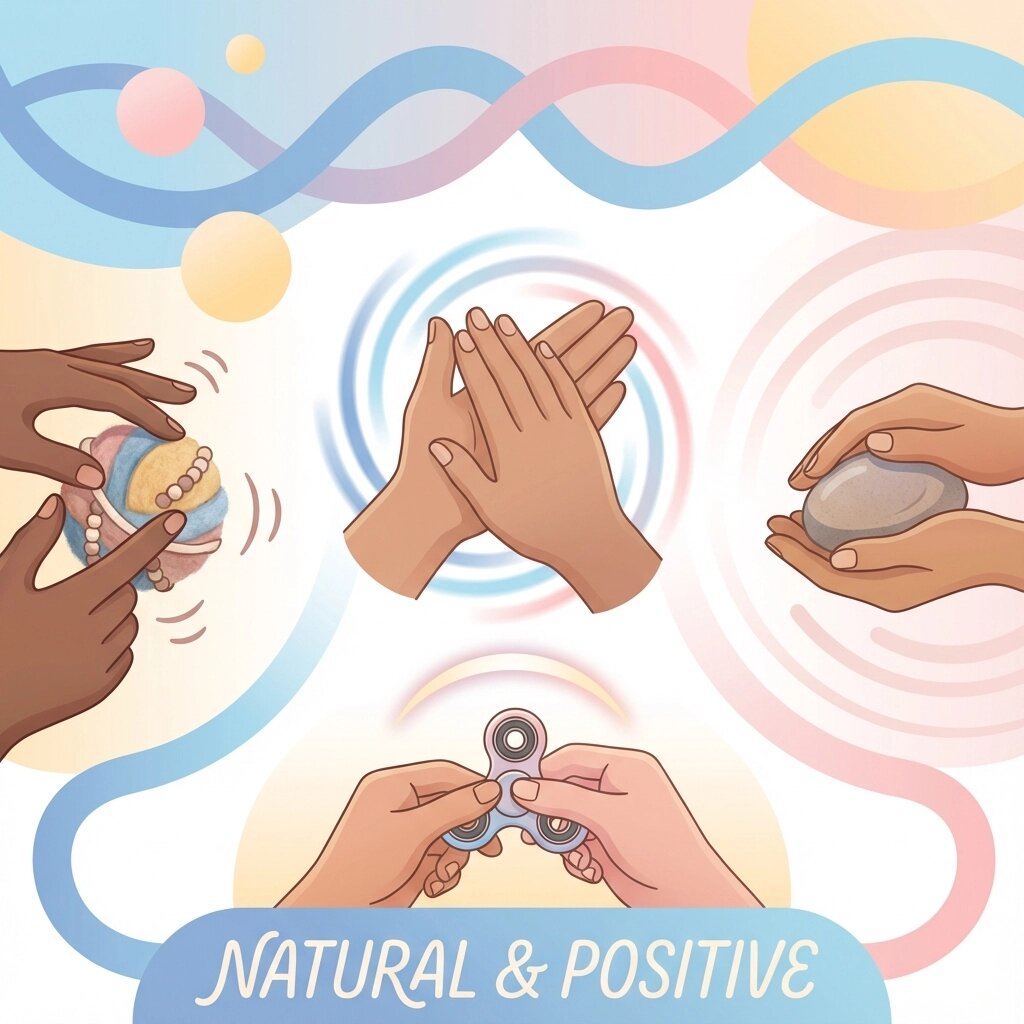
Playing with fidget toys
-
Touching specific objects repeatedly
Sound-Based Stimming
-
Humming or making vocal sounds
-
Repeating words or phrases
-
Clicking or snapping fingers
-
Listening to the same song on repeat
-
Making sounds with objects
Visual Stimming
-
Watching spinning objects
-
Looking at lights or reflections
-
Blinking repeatedly
-
Moving fingers in front of eyes
-
Focusing on patterns or colors
When Stimming Is Helpful (Hint: Usually)
The short answer? Most of the time, stimming is helpful. Here’s when it’s working in someone’s favor:
It’s Not Causing Harm
If someone’s stimming isn’t hurting them or others, it’s generally serving a positive purpose. A child who rocks while doing homework might actually be helping themselves concentrate better.
It’s Helping with Regulation
When stimming helps someone stay calm, focused, or emotionally balanced, it’s doing exactly what it’s supposed to do. This is stimming at its best – functioning as a natural coping strategy.
It’s Providing Communication
If someone uses stimming to express emotions or needs, especially when verbal communication is challenging, it’s serving as an important form of self-expression.
It’s Bringing Joy
Sometimes stimming simply feels good. If someone finds genuine pleasure and happiness in their repetitive movements or sounds, that’s valuable in itself.
Supporting Healthy Stimming
If you’re a parent, partner, or friend of someone who stims, here’s how you can be supportive:
Don’t Try to Stop It (Unless There’s Harm)
The urge to stop stimming – especially in public – is understandable, but it’s usually not helpful. Stopping someone from stimming can actually increase their stress and make regulation harder.
Provide Safe Spaces
Create environments where stimming is accepted and welcomed. This might mean having fidget toys available, allowing movement during conversations, or simply not making negative comments about stimming behaviors.
Learn Their Patterns
Pay attention to when and why stimming increases. Is it during stressful situations? When excited? Understanding these patterns can help you better support the person’s needs.
Ask, Don’t Assume
If you’re curious about someone’s stimming, it’s okay to ask respectfully. Many people appreciate when others want to understand rather than judge.

When Stimming Might Need Attention
While stimming is usually positive, there are times when it might need some support or modification:
If It’s Causing Physical Harm
Self-injurious stimming (like head-banging or aggressive skin picking) needs attention. This doesn’t mean the person should stop stimming entirely, but they might need help finding safer alternatives.
If It’s Significantly Interfering with Daily Life
Sometimes stimming can make it very difficult to engage in necessary activities like work, school, or social situations. In these cases, working with a supportive professional can help find ways to balance regulation needs with daily functioning.
If It’s Causing Distress
If someone is upset or distressed by their own stimming, that’s worth addressing. This might involve finding alternative stims, understanding triggers better, or working on acceptance.
The Bottom Line on Stimming
Stimming is a natural, normal, and usually helpful behavior that serves important functions for regulation, communication, and well-being. Instead of viewing it as something to eliminate, we can understand it as a valuable tool that many people use to navigate their world.
If you’re someone who stims, know that there’s nothing wrong with you. Your body has developed these strategies for good reasons, and they’re serving important purposes.
If you’re supporting someone who stims, remember that acceptance and understanding go a long way. Creating spaces where stimming is welcome and normal can make a huge difference in someone’s comfort and well-being.
The goal isn’t to stop stimming – it’s to ensure that it’s safe, supported, and understood as the helpful behavior it usually is. When we shift from trying to eliminate stimming to supporting healthy stimming, everyone benefits.
Remember, neurodivergent experiences are valid experiences, and stimming is just one part of the beautiful diversity of human behavior. The more we understand and accept these differences, the more inclusive and supportive our communities become.