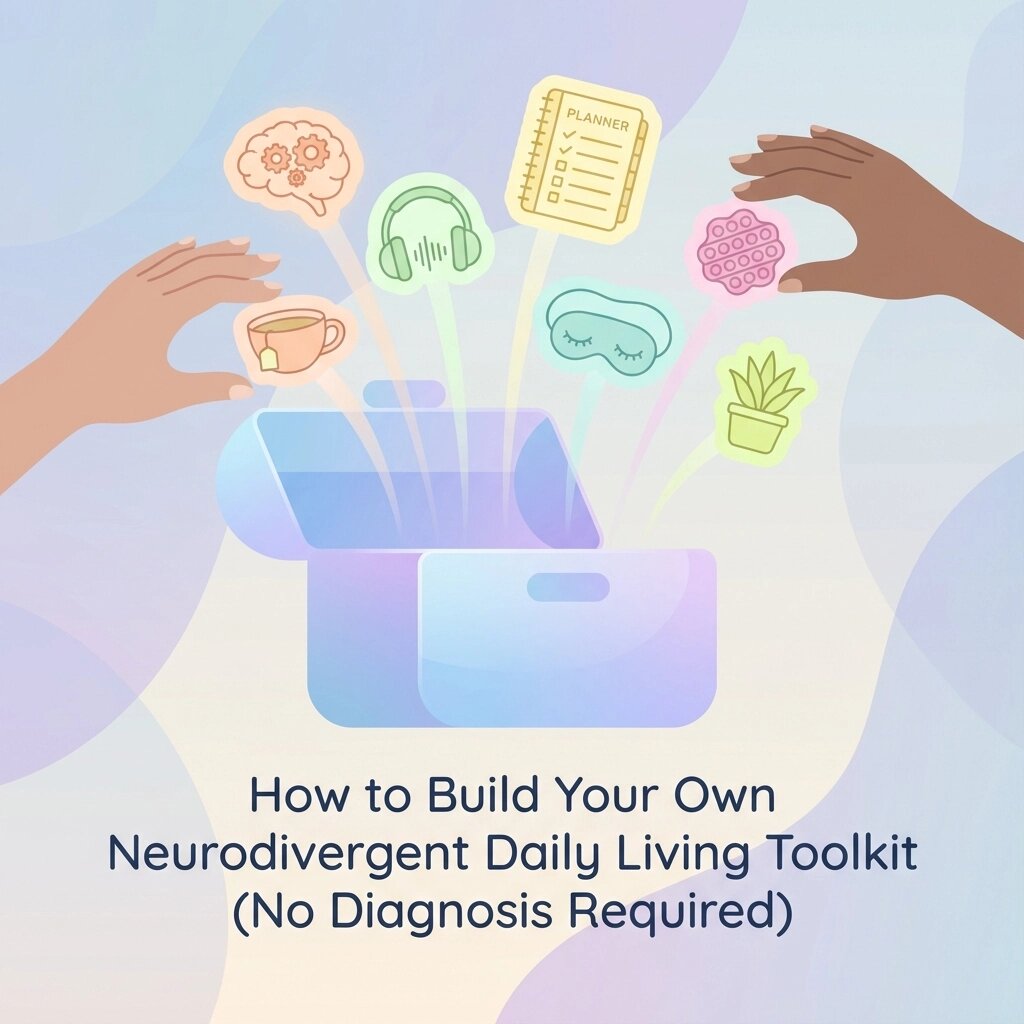
You don’t need a formal diagnosis to know that your brain works differently. Maybe you struggle with time management, get overwhelmed by sensory input, or find it hard to start tasks. Maybe you hyperfocus on things you love but can’t seem to organize your daily life. Whatever brings you here - you deserve support and tools that actually work for how your brain operates.
Building a neurodivergent daily living toolkit isn’t about fixing yourself. It’s about understanding your unique needs and creating systems that help you thrive. Let’s walk through how to build one that’s completely yours.
Start by Understanding Your Personal Challenges
Before diving into tools and strategies, spend some time identifying where you struggle most. This isn’t about self-criticism - it’s about honest self-awareness that leads to better support.
Common areas where neurodivergent folks face challenges include:
-
Time blindness: Losing track of time or struggling to estimate how long tasks take
-
Executive function difficulties: Starting tasks, staying organized, or following through on plans
-
Attention regulation: Either hyperfocusing intensely or being unable to concentrate
-
Sensory sensitivities: Feeling overwhelmed or understimulated by your environment
-
Task switching: Getting stuck on one activity or struggling with transitions
Take a week to notice patterns. When do you feel most scattered? What environments help you focus? Which daily tasks consistently trip you up? This awareness becomes the foundation for your toolkit.
Build Your Master Organization System
The heart of any good daily living toolkit is a system for managing all the stuff in your head. The “Master List” approach works particularly well for neurodivergent brains because it gets everything out of your mental storage and into a trusted external system.
Here’s how to set it up:
Step 1: Brain Dump Everything
Set a timer for 15 minutes and write down every task, obligation, goal, or “should do” that’s floating around your mind. Don’t organize yet - just get it all out. Include everything from “buy groceries” to “call mom” to “figure out career goals.”
Step 2: Categorize Without Overwhelm
Once you have your massive list, group similar items together. You might use color coding (red for urgent, yellow for important but not urgent, green for someday goals) or simple categories like “work,” “home,” “health,” and “fun.”
Step 3: Make It Visual and Accessible
Whether you use a physical notebook, a simple app like Notes, or something more robust like Notion or Todoist, make sure your system is easy to access and visually clear. Many neurodivergent people are visual processors, so seeing everything laid out helps reduce mental load.
The beauty of this approach is that it moves the cognitive burden from your brain to your external system. You’re no longer using mental energy trying to remember everything.
Choose Tools That Actually Support You
Digital Planning Options
Apps like Artful Agenda offer repetitive task features that automatically remind you of recurring activities. Set monthly reminders to replace your toothbrush, refill medications, or deep clean one area of your home. This prevents these tasks from falling off your radar entirely.
For more advanced needs, apps like Motion can automatically schedule your tasks based on your calendar and preferences. Instead of spending mental energy figuring out when to do things, the app layers tasks over your existing commitments.
Voice and Timer Tools
Electronic assistants (Google Home, Alexa, Siri) become invaluable for setting reminders, alarms, and timers throughout your day. Set alarms five minutes before important appointments. Use countdown timers for focused work sessions or to limit time spent on potentially hyperfocus-inducing activities.
The Pomodoro Technique - working in 25-minute focused bursts followed by 5-minute breaks - can help maintain attention and prevent burnout. It creates natural stopping points that combat hyperfocus and make large tasks feel manageable.
Design Your Sensory Environment for Success
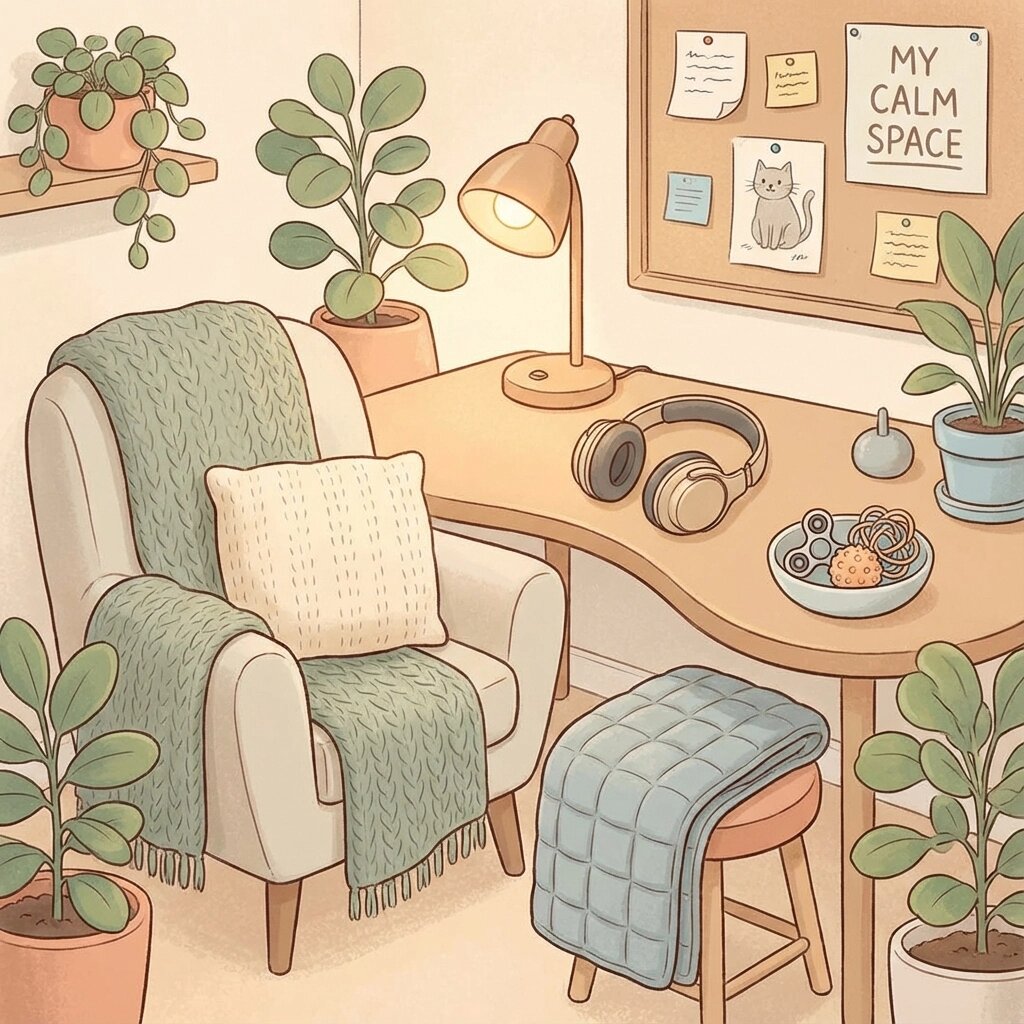
Your physical environment massively impacts your ability to function. Instead of fighting against your sensory needs, design spaces that work with them.
Creating Focus-Friendly Spaces
Consider what sensory inputs help you concentrate. Some people work better with background noise, others need complete silence. You might focus better with dim lighting, or you might need bright, full-spectrum light. There’s no right answer - only what works for your nervous system.
Try using specific scents or candles while working to create distinct environmental markers between different activities. This helps your brain transition between “work mode” and “rest mode.”
Managing Sensory Overload
Keep sensory regulation tools easily accessible. This might include:
-
Noise-canceling headphones or earplugs
-
Fidget tools that help you process while thinking
-
Weighted blankets or lap pads for calming pressure
-
Sunglasses for light sensitivity
-
Comfortable clothing that doesn’t create distracting sensations
Remember: accommodating your sensory needs isn’t being “difficult” or “high maintenance.” It’s giving your brain the environment it needs to function well.
Implement Assistive Technology Solutions
Technology can eliminate many daily friction points that drain energy from neurodivergent brains.
Finding Lost Objects
Tile sound tags or AirTags can be lifesavers for commonly misplaced items like keys, wallets, or important paperwork. The few seconds of searching becomes a simple button press.
Visual and Audio Aids
Use your devices’ built-in accessibility features:
-
Text-to-speech for reading long articles or documents
-
Voice-to-text for capturing thoughts quickly
-
Visual timers that show time passing
-
Calendar apps with visual schedules and color-coding
Task Management Helpers
Visual progress bars and completion tracking can provide motivation and clarity about what you’ve accomplished. Many people find checking off completed tasks genuinely satisfying and energizing.
Build Flexibility Into Every System
One of the biggest mistakes in creating support systems is making them too rigid. Neurodivergent brains often have variable energy, attention, and motivation from day to day. Your toolkit needs to account for this reality.
Energy-Based Task Planning
Instead of assigning tasks to specific days, consider organizing them by energy level required:
-
High energy days: Complex projects, social interactions, administrative tasks
-
Medium energy days: Routine maintenance, moderate planning, familiar activities
-
Low energy days: Simple self-care, gentle movement, passive learning
This prevents your system from becoming another source of shame when you can’t do “today’s” tasks because your brain isn’t cooperating.
Flexible Routines vs. Rigid Schedules
Create routine frameworks rather than minute-by-minute schedules. For example: “Morning routine includes showering, eating breakfast, and reviewing today’s priorities” rather than “7:00 shower, 7:30 breakfast, 8:00 check calendar.”
This gives you structure while allowing for the reality of how neurodivergent brains actually work - sometimes you need extra transition time, sometimes tasks take longer than expected, and sometimes you need to switch the order based on what feels manageable.
Implement Regular Review and Adjustment
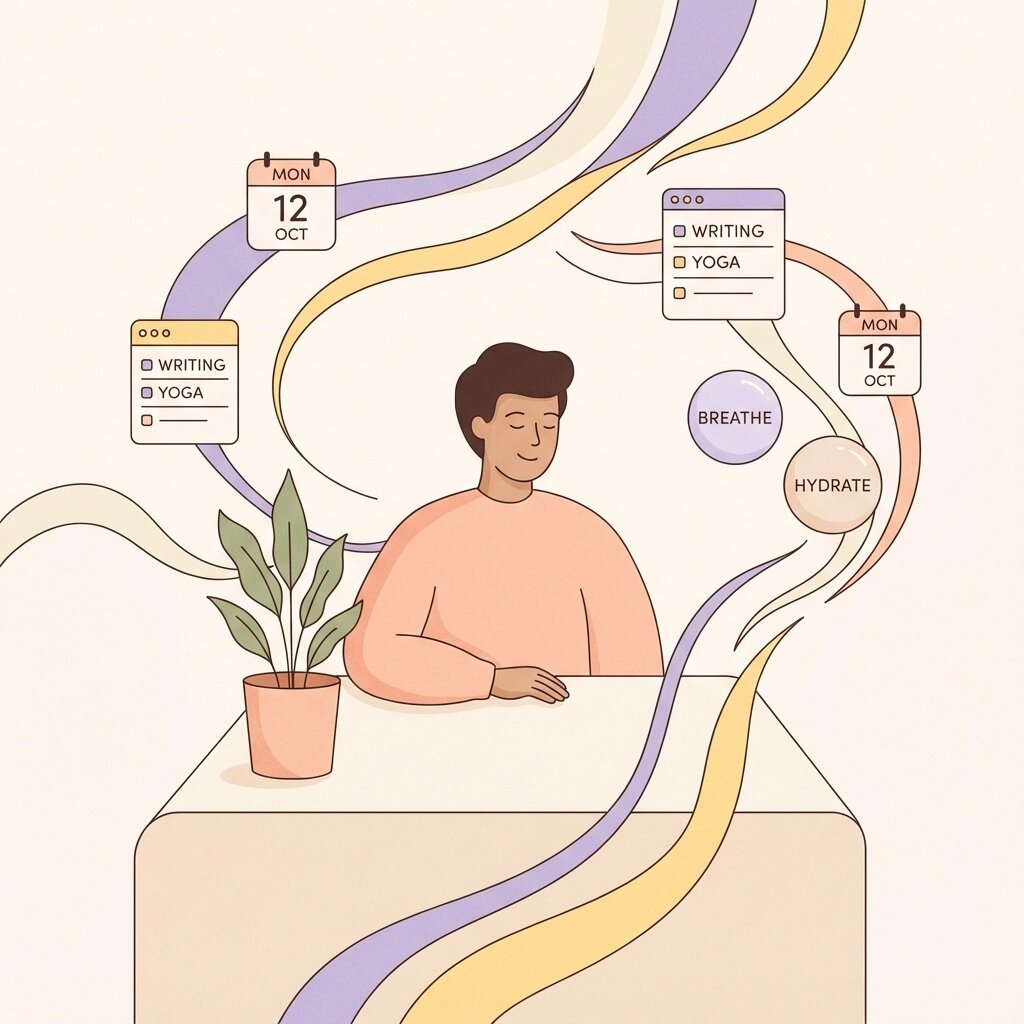
Your toolkit should evolve as you learn what works for your specific brain. Set aside time weekly - maybe 15-20 minutes on Sunday evening - to review and adjust your systems.
Weekly Review Questions:
-
What worked well this week?
-
What felt overwhelming or unsustainable?
-
What new challenges came up that need addressing?
-
How can I adjust my systems to work better next week?
If you encounter complex, multi-step tasks that keep getting pushed off, break them into smaller, more manageable subtasks. “Clean the house” becomes “clear kitchen counter,” “load dishwasher,” “vacuum living room” - individual tasks that feel doable rather than overwhelming.
Remember: This Is About Supporting Yourself, Not Fixing Yourself
Your brain isn’t broken. It works differently, and different brains need different kinds of support. The goal isn’t to become neurotypical - it’s to create systems that help your unique brain thrive.
Start small. Pick one or two tools from this guide and test them for a few weeks. Notice what reduces stress and what adds to it. Gradually add more elements as you discover what provides the most benefit for the least effort.
There’s no “perfect” toolkit, only what works for you right now. As your life changes, your needs will change, and your systems can adapt too. Be patient with yourself as you figure out what supports your brain best.
The most important thing to remember? You deserve support, accommodation, and tools that work for you - no diagnosis required.