Living with ADHD at home can feel overwhelming. One moment you’re motivated to tackle everything, and the next, you’re staring at a growing pile of tasks that seem impossible to manage. If this sounds familiar, you’re not alone – and more importantly, there are practical strategies you can start using today to make your home life more manageable.
The key isn’t perfection or complex systems. It’s about working with your ADHD brain, not against it. Let’s explore simple, effective approaches that actually stick.
Start with Structure (But Keep It Simple)
Your ADHD brain craves predictability, even when it feels like it’s fighting against routines. The trick is creating just enough structure without making it feel restrictive.
Build daily anchor habits that happen at the same time every day. These might include:
-
Making your bed when you wake up
-
Doing dishes after dinner
-
A 5-minute pickup before bed
-
Taking medications at the same time
Choose just 2-3 anchor habits to start. Once these feel automatic (usually after 2-3 weeks), you can add more. The goal is consistency, not perfection – if you miss a day, just restart the next day without judgment.

Create flexible routines rather than rigid schedules. Instead of “vacuum at 2 PM every Tuesday,” try “vacuum sometime Tuesday afternoon.” This gives you structure while honoring your need for spontaneity and accommodating unexpected ADHD moments.
Break Everything Down (Seriously, Everything)
The ADHD brain often sees tasks as either “impossible” or “done.” There’s rarely an in-between. This is where task breakdown becomes your superpower.
Use the 15-minute rule: Set a timer for 15 minutes and focus on one specific task. When the timer goes off, you can stop or do another 15-minute round. This prevents overwhelm and makes any task feel manageable.
Instead of “clean the kitchen,” break it down:
-
Load the dishwasher (5 minutes)
-
Wipe down counters (3 minutes)
-
Put away items on the counter (7 minutes)
Try the “one-thing” approach: Pick one small area to organize each day. Monday might be your bedside table, Tuesday could be one kitchen drawer. Small daily wins build momentum without creating pressure.
For bigger projects like organizing a closet, break it into 15-60 minute chunks spread across several days. Your stress level on any given day should determine the chunk size – high stress means smaller chunks.
Visual Cues Are Your Friend
Out of sight truly means out of mind with ADHD. Make important things visible and use your environment to support your goals.
Set up visual reminders in places you’ll definitely see them:
-
Sticky notes on your bathroom mirror
-
A whiteboard by your front door
-
Phone alarms with specific labels
-
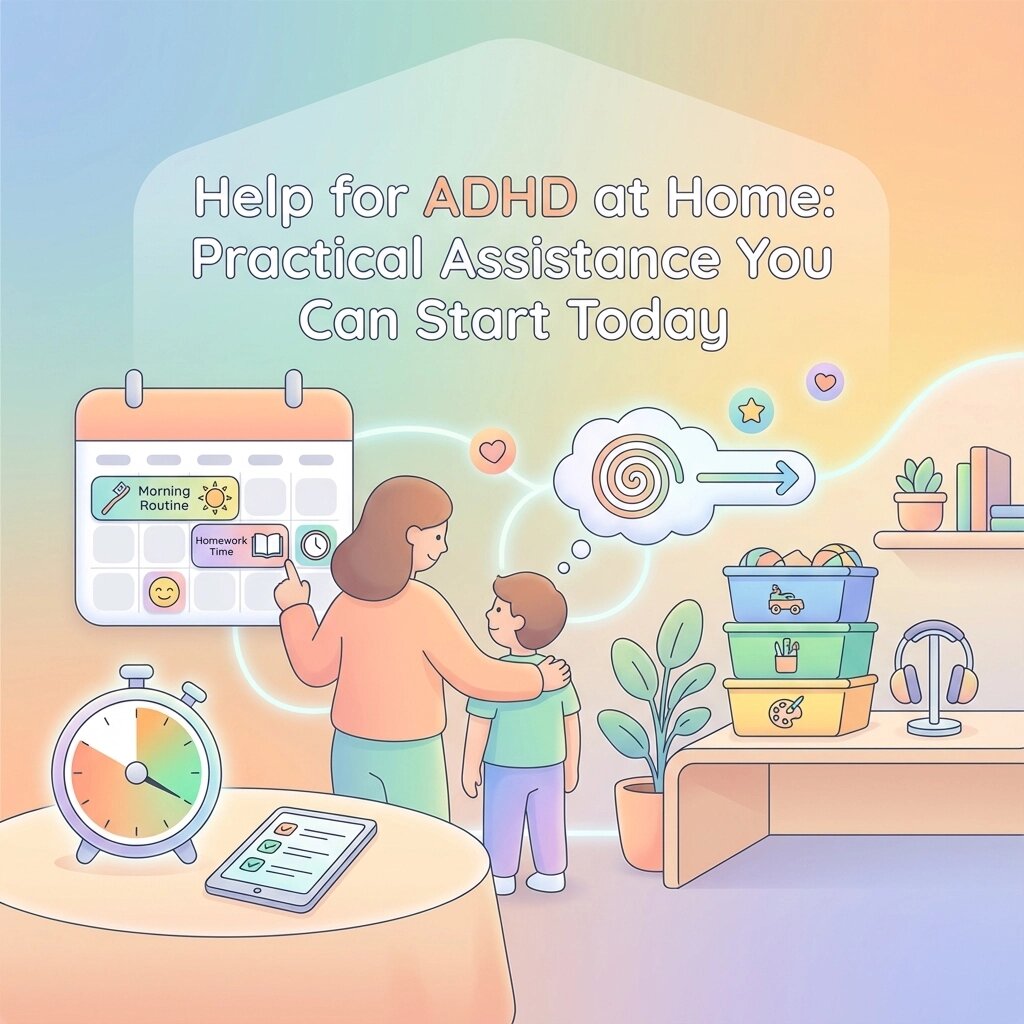
Colorful calendars in high-traffic areas
Create “launch pads” near your door with everything you need for common activities. A basket with your gym clothes, water bottle, and headphones makes it easier to exercise. Keys, wallet, and sunglasses by the door prevent last-minute searching.

Use your phone strategically: The moment you think of something important, set a reminder immediately. Don’t wait – ADHD brains are notorious for forgetting within seconds. Set notifications for routine tasks like trash pickup, medication refills, or bill due dates.
Movement Isn’t Optional
Physical activity directly improves ADHD symptoms by increasing dopamine and norepinephrine – the same neurotransmitters that ADHD medications target. You don’t need a gym membership or hour-long workouts to see benefits.
Build micro-movements into your day:
-
Do jumping jacks between tasks
-
Take phone calls while walking
-
Dance to one song while doing chores
-
Stretch during TV commercial breaks
Use movement as a transition tool: After sitting and focusing for a while, your brain needs to reset. A 5-minute walk around the house or quick exercise break can help you refocus for the next task.
Even 10-20 minutes of daily movement can significantly improve attention, reduce restlessness, and help with emotional regulation.
Time Management That Actually Works
Traditional time management often fails with ADHD because it assumes you have a natural sense of time passing. Most ADHDers don’t, so external tools become essential.
Use timers for everything:
-
Pomodoro technique (25 minutes work, 5 minutes break)
-
Time blocks for specific activities
-
Transition warnings (“5 minutes until we need to leave”)
Try time boxing: Instead of open-ended tasks, give everything a container. “I’ll work on this project from 2-3 PM” is much more ADHD-friendly than “I need to work on this project today.”
Build in buffer time: If you think something will take 30 minutes, plan for 45. ADHD time estimation is notoriously optimistic, and this prevents the cascade of stress when everything takes longer than expected.

The Power of “Good Enough”
Perfectionism and ADHD are a toxic combination. The fear of not doing something perfectly often prevents starting at all.
Embrace the 80% rule: Most tasks only need to be done “good enough” to be effective. A slightly messy but functional kitchen is infinitely better than a completely chaotic one because you’re waiting for time to clean it perfectly.
Use the “one-touch rule” for small items: When you pick something up, try to put it in its correct place immediately rather than setting it down “temporarily.” This prevents the accumulation of clutter that makes organization feel impossible.
Create ADHD-Friendly Organization Systems
Your organization system should match how your brain actually works, not how organization “should” look.
Group similar tasks together: Instead of one overwhelming to-do list, create context-based lists:
-
Phone calls to make
-
Errands to run
-
Computer tasks
-
Household tasks
Use the “one in, one out” rule: When you bring something new home, remove something else. This prevents accumulation and keeps spaces manageable.
Make important things easy to access: Store frequently used items in obvious, convenient locations. If you always drop your keys on the kitchen counter, put a small dish there instead of fighting it.
Start Small and Build Momentum
The biggest mistake is trying to change everything at once. Your ADHD brain needs wins, not overwhelming transformations.
Choose just one strategy from this article to implement this week. Once it feels natural (usually 2-3 weeks), add another. This might feel slow, but sustainable change always beats dramatic crashes.
Celebrate small wins: Finishing that 15-minute timer? That’s worth acknowledging. Remembering to set out clothes the night before? Give yourself credit. These small victories build the confidence needed for bigger changes.
Be patient with yourself: Some days will be harder than others. ADHD symptoms fluctuate with stress, sleep, hormones, and a dozen other factors. Having “off” days doesn’t mean you’re failing – it means you’re human.

When to Ask for Help
You don’t have to figure this out alone. If these strategies feel overwhelming or you’re struggling with more complex ADHD challenges, reaching out for professional support can make a significant difference.
Look for therapists who specialize in ADHD, consider ADHD coaching, or explore support groups in your area. Many people find that a combination of strategies, professional support, and sometimes medication creates the most effective approach.
Remember: managing ADHD at home isn’t about becoming someone different. It’s about creating an environment and systems that support who you already are. Start small, be patient with yourself, and focus on progress over perfection.
Your ADHD brain has unique strengths – creativity, spontaneity, ability to hyperfocus on interesting topics, and often tremendous empathy. The goal isn’t to eliminate these traits but to create a home environment where they can flourish while daily life runs more smoothly.
The strategies that work best are the ones you’ll actually use consistently. Pick what resonates, adapt it to your specific situation, and remember that any step forward is worth celebrating.